




_1-100x100.JPG)

Silver Kadas Elegant Designs for Every Occasion
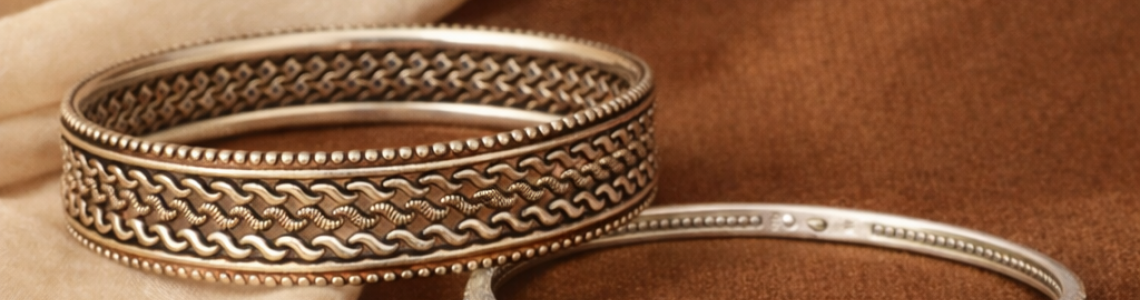
Silver Kadas by Sara Gandevikar: Elegant Designs for Every Occasion
Introduction
The reason why a silver kada is frequently purchased can be this. It is soft, durable, and can be used on a daily basis. It does not require a special occasion as required of bangles or statement jewellery. People put it on to work, at home, when travelling and even at family events without substituting it. Silver kada is given in certain instances, birthdays, milestones or even a first piece of jewellery in most Indian families. With time, the kada gets used to it. The surface itself becomes a little different, the weight is natural, and it becomes something that the wearer would reach out to on a day-to-day basis.
This practical, everyday role is what gives silver kadas their meaning. The circular shape allows easy movement, while silver’s durability makes it suitable for long-term wear. It is jewellery chosen for use, not display.
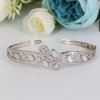
Silver Kadas by Sara Gandevikar are designed with this reality in mind. The focus is on clean forms, balanced weight, and finishes that age well with regular use. These kadas are made to fit into daily routines, not sit aside for rare occasions. With time, they stop feeling like an accessory and start feeling like something personal. A piece worn often, kept close, and carried forward with intention.
The Cultural Heart of Silver
Silver has been a symbol of innocence, security and tranquillity. It is the first metal that is administered to a child in Indian households. It is manifested in rituals, celebrations and transitional times. A silver kada can be given as a good omen, given as a sign of protection, or as a reminder of family.
It is these associations that provide silver with its emotionalization. It is an intentional and not an extravagant metal.
Within this rich cultural context, Sara Gandevikar Silver Kadas reflect the essence of Gujarati heritage with clarity and restraint. The power of tradition exists, but it is never forced. Rather, it expresses itself subtly in form, proportion, and detailing.
The designs are intuitively recognizable, like part of them. Meanwhile, they are sophisticated and modern in their expression. This balance enables the kadas to live happily in settings. They may be worn during weddings and festivals, yet they may be as appropriate during ordinary times. Workdays, family time or silent individual ceremonies. These kadas are in place wherever life is being lived.
Tradition Crafted for Today
A kada is a work that must be made with a conscious sense of strength and sensitivity. It should be able to stay in shape without being hefty. It should not look fixed and immobile. Most of all, it should be comfortable on the wrist.
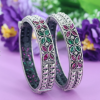
This understanding guides the making of the Designer Silver Kadas in Sara Gandevikar's collection. Both works are inspired by classical Indian motifs, including floral shapes, symmetrical geometry and traditional textures. It is these elements that are interpreted with a very fine hand so that the final design is clean and wearable.
What has been achieved is the jewellery, which shifts seamlessly between conventional and modern outfits. A kada which matches a saree as well as it fits a modern profile. In this respect, tradition is not conserved in a museum. It is free to exist, move and develop with the wearer.
Why Silver Kadas Never Go Out of Style
Trends are short-lived, yet some forms persist. Silver kadas belong to this enduring category because they adapt without losing their essence. They complement an outfit without the need to overpower it. They act excusably to shifting moods, seasons and stages of life.
As personal style continues to shift toward pieces that feel authentic rather than decorative, Silver Kadas remain deeply relevant. They are not selected in order to impress but in order to express. They have the beauty that is not hard to achieve, and the style that is always comfortable.
The Classical and the Contemporary Designs That are a Balance.
Design is the element that enables jewellery to be grounded and yet be relevant. It defines the difference between a preserved and a living piece.
The Designer Silver Kadas by Sara Gandevikar reflect this balance with intention and clarity. Their forms are considered. Their information is not accidental. These designs are not in pursuit of trends and seasonal changes. They are designed with durability in consideration. Their simplicity also makes individuality emerge, and this is because the jewellery complements the person wearing it instead of defining them.
It is this feeling of silent confidence that makes these kadas never to be forgotten.
Tranquil Monotony, Happy Company.
A kada cannot be restricted to special occasions only. It must be part of everyday living as it is part of the festivity.
The Sara Gandevikar Silver Kadas are designed with this belief. They go with working days, dilute party nights, and can still count in the contemplative moments. It is their simplicity, ease, and familiarity that are so beautiful.
They are not supposed to be put back and brought out occasionally. They are supposed to be used frequently, worn with, and remembered.
Conclusion
Life is shaped by moments, some marked and many unspoken. Jewellery often becomes the thread that quietly connects them.
The world of Silver Kadas by Sara Gandevikar reflects this continuity. Rooted in heritage and shaped for modern living, these kadas move effortlessly through different phases of life.
Chosen for their design, their cultural depth, or their emotional resonance, they carry enduring values. Grace. Timelessness. Meaning. A silver kada is not merely worn. It becomes part of one’s journey.